
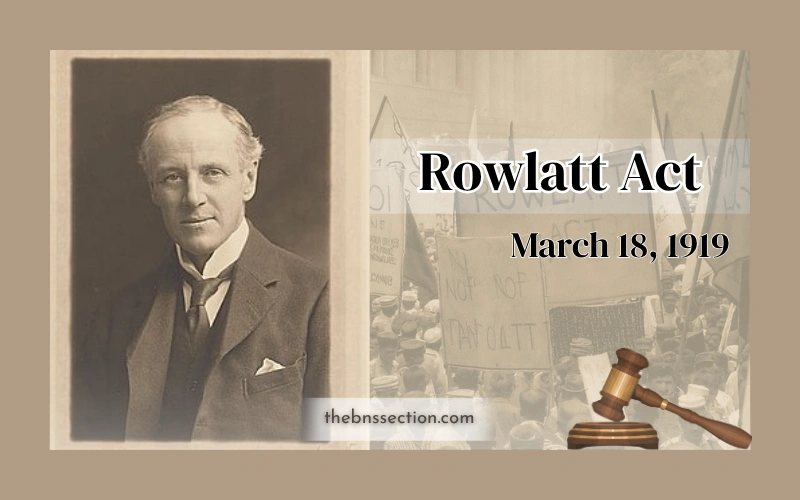
Imagine being arrested — no warrant, no lawyer, no trial. Just… gone. Sounds like a dystopian thriller, right? Well, for millions of Indians in 1919, this wasn’t fiction. It was a very real, very terrifying law passed by the British colonial government. Ladies and gentlemen, welcome to the world of the Rowlatt Act — the piece of legislation so outrageous that it united an entire nation against its colonial rulers.
Whether you’re a Class 10 student trying to crack your board exams, a curious history buff, or someone who just stumbled upon this topic wondering “Rowlatt Act kya hai?” — you’ve landed in the right place. By the end of this article, you’ll not only understand what the Rowlatt Act 1919 was, but you’ll also feel the anger, the injustice, and the fire it ignited across India.
Quick Facts: Sir Sidney Rowlatt & The Act He Inspired
| Detail | Information |
|---|---|
| Full Name | Sir Sidney Arthur Taylor Rowlatt |
| Profession | British Judge, King’s Bench Division |
| Born | 1862, England |
| Died | 1945 |
| Role | Chairman, Sedition Committee (1917–1918) |
| Act Named After Him | Rowlatt Act, 1919 |
| Official Name of Act | The Anarchical and Revolutionary Crimes Act, 1919 |
| Date of Passing | March 18, 1919 |
| Enacted By | Imperial Legislative Council, British India |
| Indian Members Who Voted | All Indian members voted AGAINST it |
| Notable Consequence | Triggered Jallianwala Bagh Massacre (April 13, 1919) |
What Is Rowlatt Act? Let’s Break It Down Simply
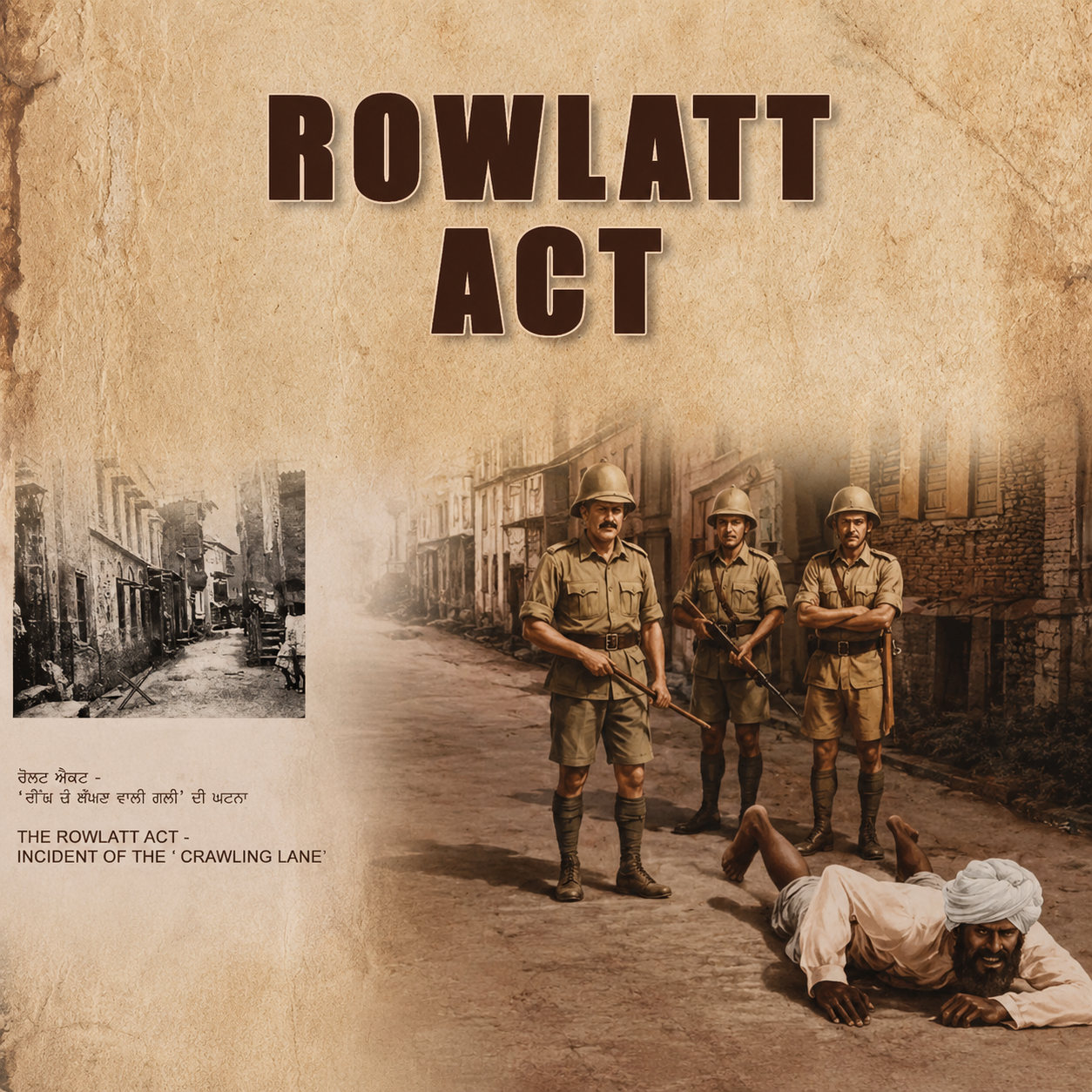
Let’s start with the basics — What is Rowlatt Act?
The Rowlatt Act, officially titled The Anarchical and Revolutionary Crimes Act, 1919, was a legislation passed by the British Imperial Legislative Council in India on March 18, 1919. The act gave the British colonial government sweeping powers to arrest and imprison any Indian suspected of “revolutionary activities” — without a trial, without presenting evidence in court, and without even needing to explain the arrest.
In plain English? The British government could lock you up if they suspected you of being a troublemaker. No proof needed. No lawyer allowed. No questions asked.
Now you might be asking — Rowlatt Act kab parit hua? The answer: March 18, 1919. And boy, did it create a storm.
Expert Insight — Dr. Bipan Chandra, Renowned Historian: “The Rowlatt Act was the culmination of repressive colonial legislation. It exposed the true nature of British ‘rule of law’ in India — one that applied to Indians differently than to Englishmen.”
The Background: Why Was the Rowlatt Act Passed?
Here’s where it gets really interesting — and a little infuriating.
World War I had just ended (1918). India had contributed enormously to the British war effort — over 1.5 million Indian soldiers had served, and India had sent massive financial resources to support Britain. Indians expected gratitude, political reforms, and more autonomy in return. The Montagu-Chelmsford Reforms were in discussion, giving Indians a cautious sense of hope.
But the British had other plans. 😤
During the war years, there had been several nationalist uprisings and revolutionary activities — most notably the Ghadar Movement and Home Rule Leagues led by Bal Gangadhar Tilak and Annie Besant. The British were scared. Deeply scared. They feared a mass nationalist uprising now that the war was over and soldiers were returning home.
So in 1917, the Imperial government appointed the Sedition Committee, chaired by British judge Sir Sidney Rowlatt, to investigate these “seditious” activities and recommend how the government could deal with them. The committee submitted its report in 1918, and by March 1919, the Rowlatt Act was law.
The British justified it as a necessary tool against “anarchist and revolutionary crime.” Indians called it something else entirely — a Black Act (Kala Kanoon).
Key Provisions of the Rowlatt Act 1919: The Devil Is in the Details
So what exactly did the Rowlatt Act allow? Here’s the terrifying breakdown:
1. Arrest Without Warrant Any person suspected of involvement in “revolutionary activity” could be arrested without a warrant. No need for the police to justify the arrest to a magistrate first.
2. Detention Without Trial Suspects could be detained indefinitely — meaning you could rot in jail without ever facing a court of law. This was essentially internment — a tool typically reserved for wartime enemies.
3. Trial in Special Tribunals If a case did go to trial, it would be heard by special tribunals — not regular courts. These tribunals could convict people with reduced procedural safeguards. No jury. Limited right to appeal.
4. Restrictions on Reporting The press was restricted from reporting on proceedings related to the act, effectively gagging public knowledge about arrests and trials.
5. Powers to Search Without Warrant Law enforcement could search premises without needing prior judicial approval.
Why Indians Were Outraged by the Rowlatt Act
Now we come to the question that many exam papers love: Why Indians were outraged by the Rowlatt Act?
Oh, where do we even begin? 😤
First, the betrayal was personal.
Indians had fought and died in World War I under the promise of greater self-governance. The Rowlatt Act was a slap in the face. Instead of more rights, they got fewer rights.
Second, it violated basic human dignity.
The concept of habeas corpus — the legal principle that you cannot be detained without cause — had been a cornerstone of British law since 1215. The Magna Carta itself guaranteed it. But apparently, that only applied to British citizens, not Indian subjects. The hypocrisy was staggering.
Third, even Indian members of the Imperial Legislative Council opposed it.
Every single Indian member voted against the Rowlatt Act. The government passed it anyway, using its official majority. This showed Indians exactly where they stood — as voiceless subjects, not citizens.
Fourth, it was peacetime legislation.
The Rowlatt Act came after World War I had ended. There was no ongoing emergency. The British were simply using emergency-level powers in normal times to suppress political dissent. Indians saw this for exactly what it was — authoritarian overreach.
Expert Insight — Jawaharlal Nehru, in “The Discovery of India”: “The Rowlatt Act made us feel as if we had been pushed back to the medieval ages — when rulers could imprison at will and no law could protect the common man.”
Gandhi’s Response: The Birth of Rowlatt Satyagraha
This is where our story truly gets epic. Enter one Mohandas Karamchand Gandhi — and the beginning of his transformation into the Mahatma we all know.
Gandhi had returned to India from South Africa in 1915 and had been carefully observing Indian politics. The Rowlatt Act was the tipping point. He called it “the Black Act” and declared that it could not be submitted to under any circumstances.
On February 24, 1919, even before the act was officially passed, Gandhi drew up a Satyagraha Pledge — a vow of civil resistance. He launched the Rowlatt Satyagraha, calling on Indians to:
- Observe a nationwide hartal (strike) on April 6, 1919
- Fast and pray
- Suspend all business and normal activities
- Defy the law through peaceful non-cooperation
The response was unprecedented. It was the first truly all-India mass movement. Cities from Bombay to Delhi, from Lahore to Madras, came to a standstill. Hindus and Muslims marched together. Rich and poor participated side by side. The Rowlatt Satyagraha was the first real demonstration that India could unite against British rule.
For Gandhi, this was both a triumph and a lesson in how quickly events could spiral — as the tragic events in Amritsar would soon prove.
The Jallianwala Bagh Connection: When Protest Turned to Tragedy
No article on the Rowlatt Act is complete without addressing its most horrifying consequence.
Following the April 6 hartal, protests continued to grow. The British administration, rattled by the scale of the movement, began cracking down. Leaders like Gandhi, Dr. Saifuddin Kitchlew, and Dr. Satyapal were arrested or deported from various cities.
In Amritsar, Punjab, this crackdown sparked massive public anger.
On April 13, 1919 — the day of Baisakhi — thousands of unarmed civilians gathered in Jallianwala Bagh, a walled garden in Amritsar, for a peaceful protest meeting. General Reginald Dyer marched in with troops and, without any warning, ordered them to open fire on the crowd.
For 10 minutes, soldiers fired into the trapped crowd. Official British figures listed 379 deaths and over 1,200 wounded. Indian estimates put the death toll far higher — over 1,000 people.
The Jallianwala Bagh Massacre was a direct consequence of the repressive climate created by the Rowlatt Act. It shattered whatever remaining faith Indians had in British justice, and it permanently radicalized the independence movement.
The British government commissioned the Hunter Commission to investigate. General Dyer was eventually asked to resign — but faced no criminal prosecution. The massacre and its aftermath made the demand for Indian independence not just a political goal, but a moral imperative.
Rowlatt Act and the Non-Cooperation Movement: The Long Chain of Events
The fury sparked by the Rowlatt Act 1919 and the Jallianwala Bagh massacre didn’t die down — it grew. It eventually fed directly into the Non-Cooperation Movement of 1920-1922, which was Gandhi’s first full-scale mass movement against British rule.
The timeline looks something like this:
- March 1919: Rowlatt Act passed → Indian outrage
- April 1919: Rowlatt Satyagraha; Jallianwala Bagh Massacre
- 1920: Gandhi launches Non-Cooperation Movement
- 1922: Chauri Chaura incident; Gandhi calls off movement
- 1930: Civil Disobedience Movement (Dandi March)
- 1942: Quit India Movement
- 1947: Independence
Rowlatt Act in Retrospect: What It Tells Us About Power
Let’s zoom out for a moment and think about what the Rowlatt Act really represents — beyond the dates and names that appear in Rowlatt Act Class 10 textbooks.
The Rowlatt Act is a textbook example of what happens when a government prioritizes control over justice. When authorities use the apparatus of law not to protect people but to suppress them, they don’t achieve stability — they ignite revolution.
The British thought that by passing the Rowlatt Act, they would silence dissent. Instead, they created the conditions for India’s most powerful mass movements. They wanted to prevent a revolution. They started one.
Expert Insight — Prof. Sumit Sarkar, Historian: “The Rowlatt Act crystallized anti-colonial sentiment in a way no other single measure had done. It was the colonial government’s greatest political miscalculation.”
This is a lesson that echoes through history — from colonial India to modern democracies. Laws that undermine civil liberties in the name of security almost always backfire, inspiring greater resistance than they suppress.
Rowlatt Act Class 10: Key Points for CBSE Students
For students preparing for their Class 10 board exams, here’s a crisp summary of everything you need to know about the Rowlatt Act:
What was the Rowlatt Act?
A law passed by the British Imperial Legislative Council on March 18, 1919, officially called the Anarchical and Revolutionary Crimes Act, 1919. It allowed detention without trial and arrest without warrant.
Rowlatt Act kab parit kiya gaya?
March 18, 1919.
Why was it passed?
To suppress revolutionary and nationalist activities in India, especially after World War I, when the British feared a mass uprising.
What was the Indian reaction?
Massive outrage. Gandhi launched the Rowlatt Satyagraha. Nationwide hartals were observed. It eventually led to the Jallianwala Bagh Massacre.
Why were Indians outraged by the Rowlatt Act?
Because it violated basic civil liberties, denied the right to a fair trial, was imposed despite unanimous opposition by Indian members of the legislature, and represented a fundamental betrayal after India’s contribution to WWI.
What did it lead to?
The Jallianwala Bagh Massacre (April 13, 1919), the Non-Cooperation Movement (1920), and a permanent hardening of India’s independence movement.
Conclusion: The Black Act That Lit India’s Fire
So there you have it — the complete story of the Rowlatt Act, from its shadowy origins in a British courtroom to its explosive consequences on the streets of Amritsar and across the length and breadth of India.
The Rowlatt Act 1919 was meant to silence a nation. Instead, it gave that nation its loudest voice. It was meant to prevent revolution. Instead, it guaranteed one.
For students, it’s a critical chapter in your CBSE syllabus. For history enthusiasts, it’s a masterclass in how repression breeds resistance. And for all of us — it’s a reminder that justice delayed is not just justice denied; it’s justice defied.
The Rowlatt Satyagraha showed the world that non-violent mass resistance could shake an empire. And it all started because of one deeply unjust law — the Black Act that Indians refused to accept.
Read More:
- THE BNS SECTION
- Dhara 151 Kya Hai
- Article 21 of Indian Constitution
- 341 IPC in Hindi
- 137(2) Bns in Hindi
- 144 BNSS in Hindi
- 302 धारा क्या है
- 281 BNS
- 352 BNS in Hindi
- 354 IPC in Hindi
- 351(3) BNS in Hindi
- 115(2) BNS in Hindi
- 333 BNS in Hindi
- 74 BNS in Hindi
Frequently Asked Questions
Q1. What is the Rowlatt Act? (Rowlatt Act kya hai?)
The Rowlatt Act (officially the Anarchical and Revolutionary Crimes Act, 1919) was a British colonial law that allowed the government to arrest and detain Indians suspected of revolutionary activities without trial or warrant.
Q2. Rowlatt Act kab parit hua tha?
The Rowlatt Act was passed on March 18, 1919 by the Imperial Legislative Council of British India.
Q3. Why is it called the “Black Act”?
Indians called the Rowlatt Act the “Black Act” (Kala Kanoon) because it was considered a deeply unjust, dark, and oppressive law that stripped Indians of basic civil rights.
Q4. Who opposed the Rowlatt Act?
Every Indian member of the Imperial Legislative Council voted against it. Mahatma Gandhi led the nationwide Rowlatt Satyagraha in opposition. Muhammad Ali Jinnah also resigned from the Imperial Legislative Council in protest.
Q5. What was the Rowlatt Satyagraha?
The Rowlatt Satyagraha was the nationwide civil disobedience movement launched by Gandhi in response to the Rowlatt Act. It included a nationwide hartal (strike) on April 6, 1919, and was the first mass political movement Gandhi led in India.
Q6. What was the connection between the Rowlatt Act and Jallianwala Bagh?
The Rowlatt Act sparked widespread protests. When the British arrested protest leaders in Amritsar, the outrage led to the gathering at Jallianwala Bagh on April 13, 1919, where General Dyer ordered troops to fire on unarmed civilians, resulting in a massacre.
Q7. Was the Rowlatt Act ever repealed?
Yes. The Rowlatt Act was repealed in 1922, three years after it was enacted, in the face of massive public resistance and international criticism.
Q8. What is Rowlatt Act Class 10?
In the CBSE Class 10 History curriculum (Chapter: The Age of Nationalism), the Rowlatt Act is studied as a key event that triggered the Non-Cooperation Movement and marked a turning point in India’s freedom struggle.
Explore more blogs at: salaryora
